The lightest sail on the rack doesn't always feel lightest on the water. That's one of the most surprising truths in windsurfing, and it catches even experienced riders off guard. Choosing the right gear, dialing in your rig, and building real balance takes more than reading a spec sheet. This guide cuts through the noise with evidence-backed strategies, expert-tested techniques, and practical training methods that actually move the needle. Whether you're just getting started or pushing past a frustrating plateau, you'll walk away with a clearer picture of what really drives windsurfing performance.
Table of Contents
- Choosing the right board and sail for your skill level
- Decoding sail design: Weight versus performance
- Mastering wind and water: Advanced rigging and trim techniques
- Training for balance and performance: Evidence-based methods
- Expert perspective: Why real windsurfing mastery is about mindset, not just gear
- Upgrade your windsurfing experience with Wild Surfwear
- Frequently asked questions
Key Takeaways
| Point | Details |
|---|---|
| Board and sail fit matter | Matching board volume and sail size to your skill and weight improves stability and learning. |
| Sail weight isn’t everything | How a sail feels on the water is more important than its weight on the scale, with ultralight models suited for advanced maneuvers. |
| Technique drives performance | Proper rigging, trim, and anticipation skills elevate your windsurfing control far more than gear upgrades. |
| Fitness and balance are critical | TRX suspension training can significantly accelerate your progress in windsurf-specific balance and endurance. |
| Mindset unlocks mastery | Developing humility and mental flexibility helps you progress beyond gear limitations. |
Choosing the right board and sail for your skill level
Gear selection is where most beginners go wrong. They either buy too small because they want to look advanced, or they pick gear that doesn't match their body weight. Both mistakes slow progress and kill confidence fast.
Board volume is the first thing to get right. Volume, measured in liters, determines how well a board floats and stabilizes you while you're learning to balance and control the sail. Beginners need boards between 140-210L with small sails in the 4-7.5m² range, ideally in winds between 8-18mph. A general rule: your board volume should be at least your body weight in kilograms plus 50-75 liters when starting out.
Here's a quick reference for matching board volume to skill level:
| Skill level | Board volume | Sail size | Wind range |
|---|---|---|---|
| Beginner | 140-210L | 4.0-5.5m² | 8-15mph |
| Intermediate | 100-140L | 5.0-6.5m² | 12-22mph |
| Advanced | 70-100L | 6.0-8.0m² | 18-30mph+ |
For improvers, progressive boards like the Severne Verso are worth exploring. These boards are designed to grow with you, offering enough stability for learning while still rewarding better technique. You can check out board model comparisons to see how different shapes perform across conditions.
Beyond the board, your essential gear checklist should include:
- Harness: Seat harnesses for beginners, waist harnesses for advanced riders
- Leashes: Board leash and sail leash for safety in open water
- Boom and mast: Properly sized to your sail and height
- Wetsuit or rashguard: Matched to water temperature and UV exposure
- Pre-session inspection: Check all connections, joints, and sail panels before every session
Understanding surfwear trends for performance also matters here. The right apparel reduces drag, protects your skin, and keeps you comfortable through long sessions.
Pro Tip: Never underestimate board volume. Riding a board that's too small too soon leads to exhaustion and frustration. Extra volume gives you the platform to actually practice technique instead of just fighting to stay upright.
Decoding sail design: Weight versus performance
Now that you know how to choose fundamental gear, let's unravel what makes sail design truly impactful.
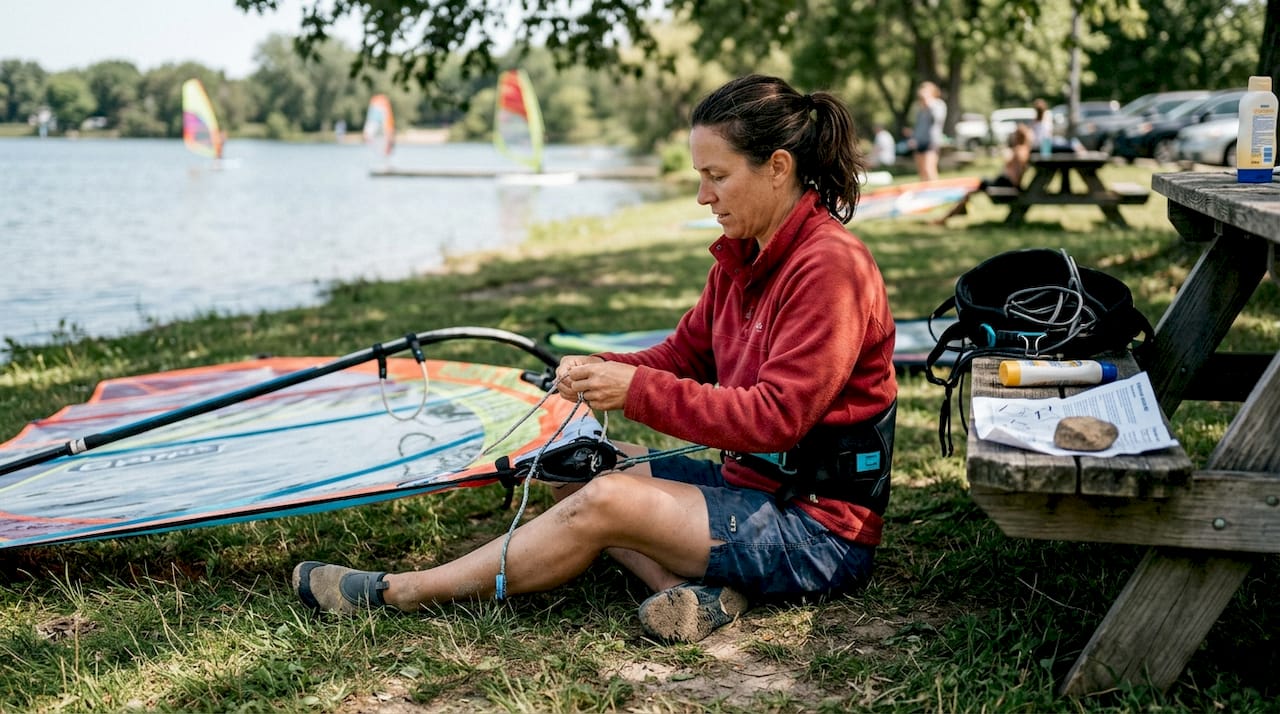
The biggest misconception in sail shopping is that a lighter sail always performs better. Scale weight tells you something, but it doesn't tell you everything. Lighter ultralight and pro models offer better gust tolerance and handling, but the perceived weight on the water matters more than what the scale reads. A sail that feels balanced and responsive in your hands will outperform a technically lighter sail that pulls awkwardly.
Here's how standard and ultralight sails compare across key factors:
| Factor | Standard sail | Ultralight/pro sail |
|---|---|---|
| Weight | 4.5-5.5kg | 3.2-4.2kg |
| Cost | $300-$600 | $700-$1,400+ |
| Handling | Good | Excellent |
| Gust tolerance | Moderate | High |
| Best for | Learning, cruising | Wave riding, racing |
Major brands like Severne, Neil Pryde, and Duotone have all pushed their 2026 lineups toward reduced swing weight, which is the rotational feel of the sail as you gybe and tack. That's the number that actually changes how a session feels.
"The sail that feels right in your hands will always outperform the one that looks best on paper."
One of the smartest investments you can make is actually in your mast, not your sail. Investing in mast first is more cost-effective; a 75-90% carbon mast performs nearly as well as a full 100% carbon mast at a significantly lower price. A quality mast improves how any sail behaves, making it a smarter first upgrade than chasing the latest sail model.
Key things to evaluate when buying a sail:
- Draft depth: Deeper draft for power, flatter for speed
- Batten count: More battens mean more stability in strong winds
- Luff curve: Affects how the sail loads on the mast
- Panel layout: Monofilm panels for visibility and light feel, X-ply for durability
Paying attention to comfort and sail handling is just as important as the technical specs. If a sail is uncomfortable to rig or handle, you'll avoid pushing your limits with it.
Pro Tip: Test a 75-90% carbon mast before upgrading your sail. Most riders notice a bigger improvement from a quality mast than from switching sail brands entirely.
Mastering wind and water: Advanced rigging and trim techniques
Once your equipment is chosen, maximizing its potential boils down to sophisticated rigging and trim mastery.
Sail trim is the art of adjusting your rig so it works with the wind rather than against it. Four factors control everything:
- Downhaul tension: Opens the leech (trailing edge) for twist and speed
- Outhaul tension: Flattens or deepens the sail's draft
- Mast curve: Affects how the sail distributes power
- Harness line position: Controls where you transfer load from your arms to your body
Optimal downhaul opens the leech for speed and twist, while the outhaul should just touch the boom when the sail is sheeted in. These two adjustments alone account for most of the performance difference between a well-rigged and poorly rigged sail.
For high wind sessions, follow these steps to stay in control:
- Increase outhaul tension to flatten the sail and reduce power
- Lengthen harness lines by 1-2cm to reduce arm fatigue
- Lower the boom slightly to shift your center of gravity
- Anticipate gusts by reading water texture ahead of you
- Check downhaul to ensure the leech releases cleanly in strong puffs
In high winds, increasing outhaul and lengthening harness lines while lowering the boom are the core adjustments that keep you upright and in control. The most common mistake is under-downhauling, which locks the leech and creates dangerous power spikes.
Common rigging mistakes and fixes:
- Too little downhaul: Sail feels overpowered and stiff. Add more tension.
- Boom too high: Back pain and poor leverage. Drop it to chest height.
- Harness lines too short: Arms tire quickly. Lengthen and reposition.
- Mast foot too far back: Board nose lifts. Move it forward.
Pro Tip: Mindset matters as much as mechanics when the wind picks up. Riders who anticipate gusts by watching the water surface ahead of them react faster and stay balanced longer than those who react after the fact.
Good equipment setup tips and understanding comfort's impact on setup will help you make these adjustments feel natural over time.
Training for balance and performance: Evidence-based methods
Optimal gear and setup alone can't substitute strong balance and fitness. Here's how modern training elevates your game.
Balance is the foundation of windsurfing. Without it, even perfect gear and trim won't help you stay on the board when conditions get choppy. The good news is that balance is trainable, and some methods work significantly better than others.
Research comparing TRX suspension training to traditional balance training found that TRX produces superior static and dynamic balance improvements for surfers, outperforming conventional methods across every measured category. This TRX training study tracked athletes over five weeks and recorded measurable gains in surf-specific balance tasks.
Here's how the two training approaches compare after five weeks:
| Balance metric | Traditional training | TRX suspension training |
|---|---|---|
| Static balance | +12% improvement | +21% improvement |
| Dynamic balance | +9% improvement | +19% improvement |
| Surf-specific tasks | +8% improvement | +22% improvement |
The reason TRX works so well is that it forces your stabilizer muscles to engage constantly. Every movement is unstable by design, which mirrors what your body experiences on a board in choppy water.
The most effective training routine for windsurfers combines:
- TRX rows and single-leg squats for dynamic balance
- Plank variations for core endurance under fatigue
- Rotational cable exercises for gybe and tack power
- Bosu ball drills for reactive balance in unpredictable conditions
- Yoga or mobility work to maintain flexibility for low stances
Understanding balance's role in performance goes beyond just staying upright. Good balance lets you focus your mental energy on reading conditions instead of fighting your own body. You can find more structured wind surf training tips to build a program around your current fitness level.
Pro Tip: Prioritize core endurance over raw strength. Windsurfing sessions can last hours, and a strong core that holds up under fatigue will serve you far better than peak power that fades after 20 minutes.
Expert perspective: Why real windsurfing mastery is about mindset, not just gear
Here's something most gear reviews won't tell you: the riders who plateau the longest are usually the ones most focused on equipment. They upgrade sails, switch boards, and obsess over carbon percentages while the actual bottleneck sits between their ears.
Real progress in windsurfing happens when you shift your attention from what you're riding to how you're reading the water. High wind mastery emphasizes anticipating gusts, building core endurance, and approaching conditions with humility. That last one is underrated. Riders who accept that conditions will always be unpredictable adapt faster than those who expect their gear to compensate for every challenge.
The turning point for most intermediate riders isn't a new sail. It's the moment they start watching the water surface 10 meters ahead, feeling the shift in pressure before it arrives, and adjusting their body weight proactively. That skill doesn't come in a box. It comes from time on the water, honest self-assessment, and the mental flexibility to keep learning even when you think you already know enough.
Upgrade your windsurfing experience with Wild Surfwear
Ready to apply what you've learned? The right surfwear completes your windsurfing setup in ways that go beyond looks.

At Wild Surfwear, we design performance apparel built for real water time. Our rashguards for windsurfing offer UPF sun protection and quick-dry fabric that keeps you comfortable through long sessions without restricting movement. Pair them with our [tropical swim trunks](https://wildsurfwear.com/products/vintage-caribbean tropical swim trunks) for a setup that looks as good on the beach as it performs on the water. Every piece is designed with ocean-inspired color and practical function in mind. Discover Wild Surfwear and find the gear that matches your level and your style.
Frequently asked questions
What is the best board volume for a windsurfing beginner?
Beginners should use boards between 140-210 liters for stability and easier control while learning to balance and manage the sail.
Do lighter sails always improve performance?
Not always. Perceived weight on water matters more than scale weight, and ultralight sails excel in waves but standard sails are often sufficient for most riders.
How do you improve balance for windsurfing?
TRX suspension training produces superior balance improvements compared to traditional methods, with measurable gains in both static and dynamic balance after just five weeks.
What is most important for high wind control?
Technique and mindset lead the way. Anticipate gusts, adjust outhaul and harness lines, and build core endurance to stay in control when conditions get demanding.
Is investing in a high-end mast worth it?
A 75-90% carbon mast performs nearly as well as a full 100% carbon mast at a much more accessible price point, making it the smarter first investment for most riders.